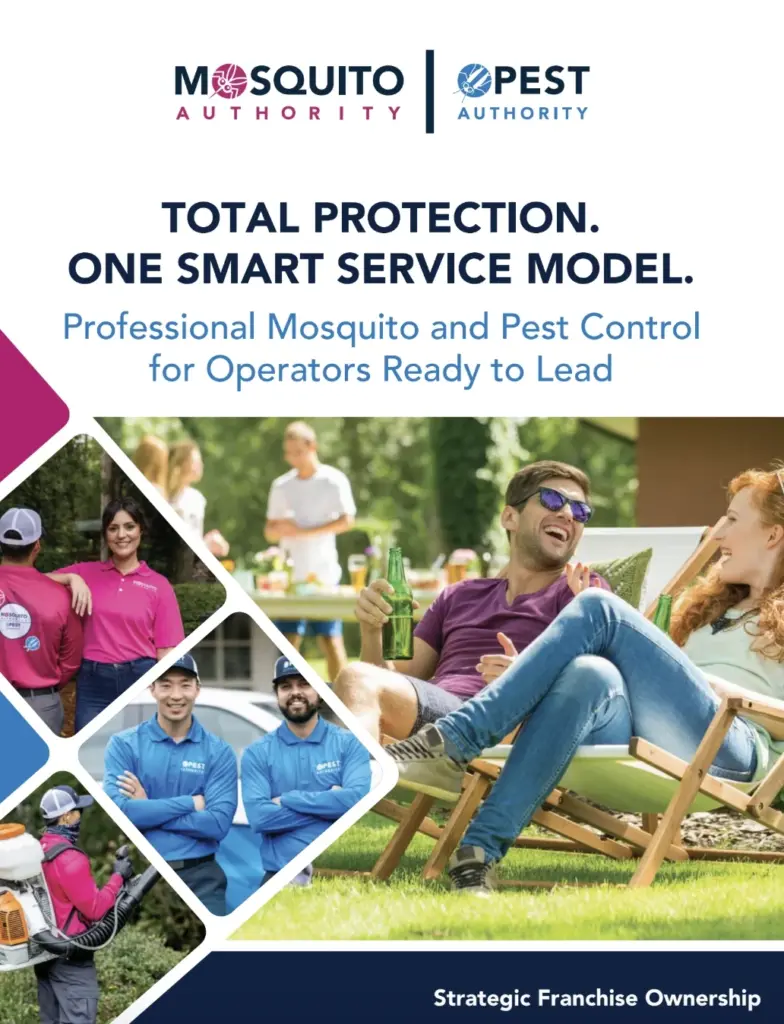

Owning a franchise in pest control or mosquito services puts you in a category where customers come back month after month, year after year. That recurring revenue structure is why home services franchises, especially pest control, consistently rank among the top options for first-time business owners.
In this guide, we cover the leading home service franchise categories available. We’ll tell you what to look for when comparing options and the steps to go from initial research to grand opening.
Why Home Services Franchises Are a Smart First Investment
Home services franchises in pest and mosquito control offer recurring, predictable revenue with minimum investments typically ranging from $55,000 to $217,000. The pest control category keeps growing because homeowners and businesses face pest problems year after year, and most people call a professional rather than handle it themselves.
For first-time owners, the franchise model removes a lot of the early guesswork. You’re buying into a system that already works somewhere else. The brand, the marketing, the training, the operational playbook all come with the franchise fee. Compare that to starting an independent pest control company from scratch, where you’d build every system yourself while also trying to win customers.
- Recurring revenue: Customers sign up for ongoing protection plans, so you’re not starting from zero each month
- Lower overhead: Many pest control franchises operate from a home office with a service vehicle
- Year-round demand: Pests don’t take seasons off, and neither does the need for professional treatment
The predictability matters. When you know roughly how much revenue is coming in next month, you can confidently plan hiring, equipment purchases, and territory expansion.
Home Services Franchise Categories to Consider
Home service franchise opportunities span a wide range of industries. Choosing the right one depends not only on market demand but also on the type of business you want to own and operate.
Pest and Mosquito Control
One of the most established niches in home services franchising, pest and mosquito control operates on a recurring service model that keeps customers on scheduled treatment plans. The work is field-based and mobile, with no storefront required. This keeps overhead low and allows owners to scale by territory rather than location.
The pest control category suits owners who want predictable monthly revenue and are comfortable managing field technicians. It’s also great for those who prefer a business with year-round or seasonal demand baked into the model. Mosquito Authority sits squarely in this space, focusing specifically on mosquito, tick, and fly control with bundled protection programs, a home-based operating structure, and a dual-brand growth path through Pest Authority for owners who want to expand into full-service pest protection.
Lawn Care and Landscaping
Lawn and outdoor maintenance franchises serve residential and commercial customers on recurring seasonal schedules. The work is physically demanding and weather-dependent, but the customer retention rate in this category tends to be high once the owner establishes relationships. The downside? Business is heavily dependent on weather and seasonality, creating potential revenue gaps in colder climates.
This category suits owners comfortable managing crews, have an interest in outdoor work, and are looking to build a business with strong multi-unit potential as territory demand grows.
Cleaning and Sanitation
Residential and commercial cleaning franchises are accessible entry points in home services, often with lower initial investment thresholds and straightforward service delivery. The model focuses on repeat accounts. Residential customers are often on weekly or biweekly schedules, commercial clients on ongoing contracts. The biggest drawback is increased crew turnover. Managing reliable staffing is one of the most consistent operational challenges owners face.
This category suits detail-oriented owners who want a high volume of recurring accounts and are comfortable building and managing a reliable cleaning team.
Home Repair and Maintenance
Handyman and home repair franchises serve the growing segment of homeowners who need professional help but do not require a licensed contractor for every job. Demand in this category often relies on aging housing stock and a declining pool of skilled tradespeople.
This category suits owners with a trades background or strong operational management skills who want to build a service business around essential, non-discretionary repair needs. That said, retaining qualified tradespeople can be an issue. Your area’s skilled labor market may limit your growth capacity.
Senior Care and Home Health
Non-medical in-home care franchises serve an aging population that increasingly prefers to receive support at home rather than in a facility. The business is relationship-intensive, built on referrals from healthcare providers and discharge planners, and requires a high standard of caregiver management. Caregiver recruitment and retention is a persistent industry-wide challenge that directly affects your ability to take on new clients and grow revenue.
This category suits mission-driven owners who are comfortable navigating a people-first business and are willing to invest time in community relationship building.
Specialty Outdoor Services
Beyond lawn care, this category includes irrigation, holiday lighting, and other property services that customers treat as seasonal add-ons or recurring protection programs. Many of these models are home-based and mobile, with strong upsell potential across a single customer base. Much like lawn care, many of these models are highly seasonal. These kinds of franchises compress a significant portion of annual revenue into a few months, which requires careful cash flow management in the off-season.
This category suits owners who want a focused service niche with clear seasonal demand and are interested in building a customer base they can expand through bundled offerings over time.
Why Pest Control and Mosquito Franchises Are Strong Picks for New Owners
Many people consider pest control an essential service. When someone has ants in the kitchen or mosquitoes taking over the backyard, they call a professional. The spending isn’t optional the way a new TV or vacation might be.
The territory model also works well for owners thinking beyond year one. You can start with a single territory, learn the operations, build a team, and then add territories as you grow. Many franchisors offer incentives for multi-unit expansion, which rewards owners who execute well in their first location.
Seasonal peaks, like mosquito season in warmer months, create predictable busy periods. Full-service pest control operates year-round, which balances revenue across the calendar. The combination of steady demand and clear growth paths makes pest control appealing for first-time owners.
What to Look for in a Home Services Franchise
Initial Investment and Franchise Fees
The franchise fee typically covers brand rights, initial training, and your protected territory. However, total investment includes more than just the fee. You’ll also pay for equipment, a service vehicle, marketing, and working capital to cover expenses before revenue ramps up.
When comparing franchises, look at Item 7 in each brand’s Franchise Disclosure Document (the FDD). Item 7 breaks down every cost category so you can see the full picture, not just the headline number.
Training and Ongoing Support
Training usually includes classroom instruction at the franchisor’s headquarters, followed by field training with experienced technicians. Some franchises also provide ongoing coaching calls and performance reviews. This ongoing training and support are essential for building a great home service brand.
Certification programs, including Pro Authority, establish a baseline for service quality across the network. For first-time owners, structured onboarding matters because you’re learning the industry while building the business at the same time.
Recurring Revenue Potential
Bundled protection programs keep customers on year-round service plans. Authority Advantage Bundles, for example, offer customers convenience and consistent coverage while giving owners predictable monthly revenue.
For new owners managing cash flow, recurring revenue helps cover fixed costs (like vehicle payments and insurance) while the customer base grows. You’re not relying entirely on new sales each month to stay afloat.
Territory rights and multi-unit growth
A protected territory means no other franchisee from the same brand can operate in your area. This protection matters for building local market share without competing against your own brand.
Ask about territory availability in your target market early in the process. Also ask whether the franchisor offers discounts or incentives for adding territories later. Some brands, like Pest Authority, offer a 30% discount on second and additional territories.
Technology and operational tools
Technology-enabled service means scheduling software, service tracking, and customer communication platforms. For first-time owners without industry experience, these tools reduce the learning curve and help keep field operations organized.
Tip: During validation calls with existing franchisees, ask how the technology tools work in daily operations. The answers will tell you whether the systems actually reduce workload or add friction.
Brand recognition and credibility
Industry rankings, like Entrepreneur’s Franchise 500, serve as credibility markers. Recognized brands help first-time owners build local trust faster than starting an unknown company.
That said, brand recognition varies by market. A nationally ranked franchise might be well-known in one region and unfamiliar in another. Ask the franchisor about brand awareness in your specific territory.
How to Fund Your First Home Services Franchise
Several financing options exist for first-time franchise buyers. SBA loans are government-backed loans available for qualified franchise purchases. The approval process takes longer than conventional loans, but the terms are often more favorable.
Some franchisors offer finance introductions, connecting candidates with preferred lenders who already understand the brand and business model. Third-party franchise lenders specialize in this type of financing and often move faster than traditional banks.
- SBA loans: Government-backed with favorable terms, but longer approval timelines
- Franchisor finance introductions: Connections to lenders familiar with the specific franchise
- Third-party franchise lenders: Specialists who understand franchise business models
- ROBS (Rollover for Business Startups): Allows 401k funds to be used without early withdrawal penalties
Funding timelines vary. Some candidates secure financing in as little as 90 days, while others take longer depending on credit history and loan type.
Steps to Owning a Home Services Franchise
Step 1. Book an introductory call
The first conversation with the franchise development team covers your goals, background, and financial qualifications. This call helps both sides determine if there’s a fit before investing more time.
Step 2. Attend the franchise webinar
A behind-the-scenes webinar explains the business model, support systems, and what daily operations look like. This is where you start understanding what ownership actually involves beyond the marketing materials.
Step 3. Review the FDD and franchise agreement
The Franchise Disclosure Document (FDD) is a legal document outlining fees, obligations, territory rights, and financial performance data (if the franchisor chooses to disclose it). A franchise attorney can help you understand what you’re signing and flag any unusual terms.
Step 4. Explore financing options
Work with the franchisor’s finance introduction resources or secure independent funding. Having financing in place before the decision step keeps the process moving.
Step 5. Validate with existing franchisees
Speak with current owners about their experience, performance, and satisfaction with support. The FDD includes a list of franchisees you can contact. These conversations often reveal details that marketing materials don’t cover.
Step 6. Sign and begin training
Once you sign the franchise agreement, onboarding begins. Training typically includes classroom instruction followed by field training in an operating territory.
Step 7. Launch your grand opening
Coordinate the launch with local marketing, community outreach, and your first customer appointments. This is where the business becomes real.
Start Your Home Services Franchise Journey
First-time owners can build successful pest control businesses with the right franchise partner. The combination of training, operational support, and a proven model reduces the risk that comes with starting from scratch.
Mosquito Authority & Pest Authority Franchising offers a dual-brand opportunity for owners interested in mosquito control, full-service pest protection, or both. The franchise family provides Authority Pro certification, technology-enabled operations, and multi-unit territory incentives for owners planning to grow.
Schedule your initial consultation with our team today!
Frequently Asked Questions About Home Services Franchises
What is the most profitable home services franchise to own?
Profitability depends on territory size, owner involvement, and service mix. Pest control and mosquito franchises with recurring revenue programs tend to generate stable income because customers stay on protection plans year after year.
How much can a mosquito franchise owner earn?
Earnings vary by territory, seasonality, and operational efficiency. Item 19 in the FDD contains financial performance representations if the franchisor chooses to disclose them. Not all franchisors include Item 19 data.
Is a pest control franchise a good investment for first-time owners?
Pest control offers essential services with repeat customers and structured franchisor support. The recurring revenue model and training programs reduce risk compared to starting an independent company without a playbook.
What does it cost to start a home services franchise?
Total investment varies by brand and territory. FDD Item 7 provides a breakdown of initial franchise fees, equipment costs, and working capital requirements for each franchise you’re evaluating.